
Art Maslow
Founder of Foxtery


Most companies treat their LMS administrator as a help desk technician who resets passwords and uploads PDFs. Meanwhile, the corporate LMS market is exploding from $13.9 billion in 2024 to a projected $50.1 billion by 2030. It's a 23.8% annual growth rate!
Moreover, 85% of business leaders expect surging skills development needs driven by AI and digital disruption over the next 3 years, yet half of HR managers report high workloads leave no room for training.
Therefore, LMS administrator role is a strategic infrastructure that determines whether training happens at all.
In this article, we're going to discuss LMS administrator role in 2026: what skilled practitioners actually do, what they earn, and how the job has transformed from gatekeeper to growth driver.
Why LMS administrators are suddenly essential (and highly paid)
The corporate LMS market grew from $13.9 billion in 2024 to a projected $50.1 billion by 2030 according to ResearchAndMarkets data. Moreover, 89% of organizations now use LMS platforms as the backbone of upskilling initiatives.
Gartner's 2024 survey found 85% of learning leaders expect dramatic increases in skills development needs due to AI disruption. When 94% of employees say they'd stay longer at companies investing in learning, according to TalentLMS research, the LMS becomes retention infrastructure.
LMS administrators earn an average of $96,148 annually as of March 2026, with ranges from $70,000 to $125,000 depending on company size and specialization.
What an LMS administrator actually does (beyond tech support)
LMS administrator is a learning technology specialist who manages digital training platforms to enable scalable employee development. This role breaks into three responsibility clusters rather than task lists.
Technical management. That includes system configuration, user permissions, platform integrations with HR systems, and troubleshooting.
Strategic deployment. It covers content curation, microlearning module organization, mobile optimization, and user experience improvements.
Data analytics and reporting form the 3rd cluster. Admins track completion rates, measure time-to-competency, identify skill gaps through usage patterns, and translate metrics into business language for leadership.
Modern LMS administrators influence learning strategy based on platform data rather than simply executing directives.
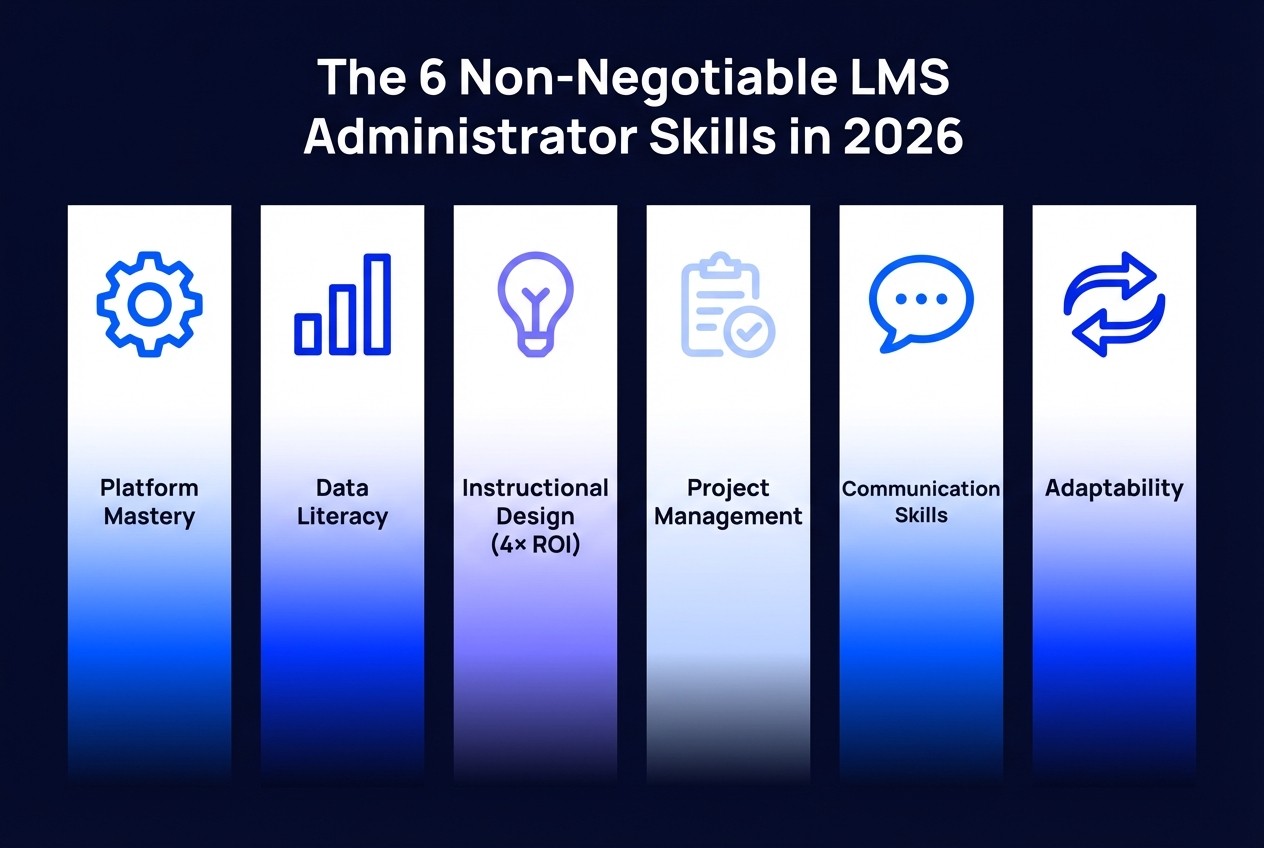
6 non-negotiable skills every LMS administrator needs in 2026
Platform mastery forms the technical foundation. Administrators need deep expertise in at least one major LMS (Moodle, Cornerstone, Workday Learning, or similar), understanding of SCORM and xAPI standards, and API integration basics.
Data literacy separates good administrators from great ones. Building dashboards that answer specific business questions ("Which skills show the widest competency gaps?" rather than "How many courses were completed?") requires interpreting patterns, not just exporting spreadsheets. Admins translate learning metrics into productivity gains.
Instructional design awareness means understanding how content structure affects outcomes. Microlearning delivers 4× ROI compared to traditional methods, but only when properly sequenced and spaced. Admins don't create courses, but they must recognize what makes training stick when organizing content libraries.
Project management capability matters because admins juggle multiple initiatives simultaneously: vendor implementations, content migrations, user training sessions, and integration projects all compete for attention.
Communication skills allow admins to translate technical platform issues into business language for executives and explain complex features in simple terms for end users. The best admins make technology invisible.
Adaptability keeps pace with rapid evolution. 72% of L&D teams now use mobile learning platforms, and 25% of Fortune 500 companies have implemented VR/AR training. Administrators must continuously learn new technologies as well as maintain existing systems.
How hybrid work and AI are reshaping the LMS admin role
The 2026 delivery model splits roughly 41% in-person, 29% virtual, and 30% self-paced according to Blanchard research. LMS administrators must now manage content across all 3 formats simultaneously.
Mobile-first design became mandatory. With 72% of learning teams using mobile platforms, admins should ensure experiences across devices. A course that works perfectly on desktop but breaks on mobile creates adoption barriers that tank completion rates.
AI integration adds new configuration responsibilities. Administrators now set up AI coaching tools, configure chatbots for learner support, and manage personalized learning path algorithms within LMS platforms.
VR and AR content management represents emerging complexity. 25% of Fortune 500 companies use immersive training and it requires admins to support new file formats, larger storage requirements, and specialized integrations that didn't exist in traditional LMS environments.
Remote troubleshooting replaced in-person support. Administrators solve technical issues through video calls, asynchronous documentation, and self-service knowledge bases rather than walking to someone's desk. It demands clearer communication and better documentation practices.
Business case: how LMS admins drive retention and ROI
94% of employees would stay longer at companies investing in learning according to WifiTalents research, and 95% of HR managers agree training improves retention. The LMS is the delivery mechanism that makes those investments accessible.
Skilled administrators:
ensure platforms deliver on that promise,
optimize user experience to reduce friction,
configure mobile access so training fits into workflow,
structure content for maximum completion.
Poor administration creates barriers that prevent employees from accessing the development opportunities leadership funded.
Microlearning ROI demonstrates the impact of proper LMS management. When administrators structure content into bite-sized modules that deliver 4× ROI versus traditional methods, they directly influence training effectiveness.
Data analysis connects learning to business outcomes. Administrators track skill acquisition, tie training completion to performance reviews, and measure time-to-productivity for new hires.
Without skilled administration, platforms sit underutilized. Companies invest in sophisticated LMS technology, then wonder why adoption remains low and ROI stays invisible.
How to get into LMS administration: certifications and pathways
Common entry points include instructional design roles transitioning to platform management, IT support professionals moving into L&D technology, and HR generalists who developed technical skills. This role sits at the intersection of learning strategy and technical execution.
Platform-specific certifications carry weight:
Moodle Certified Administrator, Cornerstone credentials, and vendor-specific programs demonstrate hands-on expertise.
General certifications from ATD (Association for Talent Development) or CPLP (Certified Professional in Learning and Performance) add credibility but don't replace platform knowledge.
Building a portfolio requires hands-on practice. Volunteering to manage LMS platforms for nonprofits, creating demonstration courses in sandbox environments, and documenting process improvements all provide concrete examples of capability. Screenshots of dashboards built, before-and-after completion rate improvements, and integration projects completed matter more than theoretical knowledge.
Data analytics skills increasingly differentiate candidates. Learning SQL basics, mastering Excel pivot tables, or gaining familiarity with business intelligence tools like Tableau positions administrators as strategic partners rather than technical support.
Networking makes career entry easier. Joining ATD chapters, participating in LMS user groups, attending vendor webinars, and following L&D technology thought leaders on LinkedIn creates visibility and learning opportunities that formal education can't match.
When to build your LMS admin team vs. using a faster platform
Traditional LMS implementations require dedicated administrators, weeks of configuration, and ongoing maintenance overhead. This model makes sense for organizations with 1,000+ employees, complex compliance requirements, highly customized workflows, or extensive legacy system integrations.
Speed-focused alternatives suit different contexts. Growing teams, frequent training updates, limited L&D headcount, and pressure to prove ROI quickly all favor platforms designed for rapid deployment. Platforms like Foxtery eliminate weeks-long setup cycles and deploy training programs in 30 minutes - no dedicated administrator required for launch.
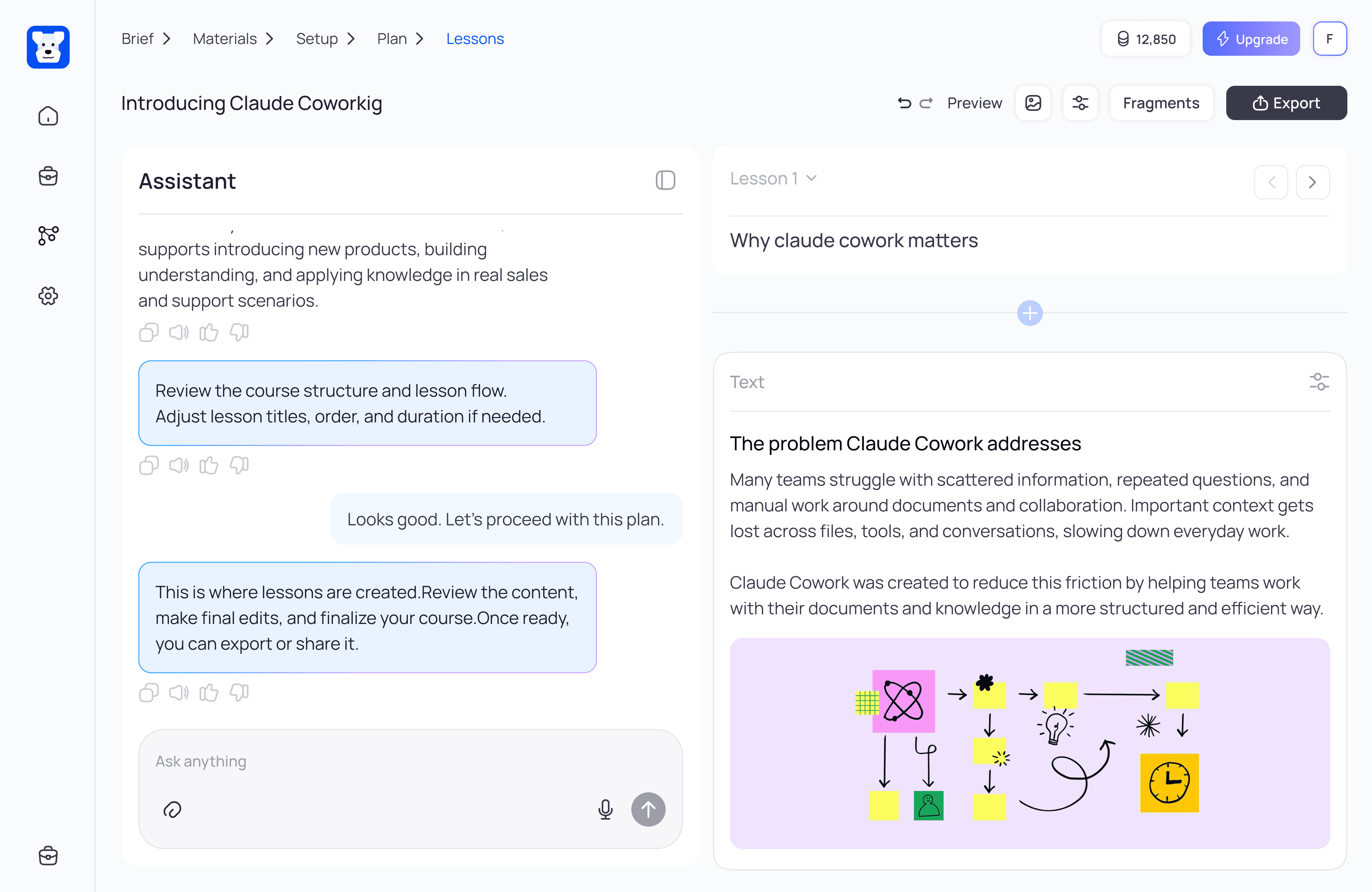
The trade-off centers on time allocation. Traditional LMS platforms consume 2-4 weeks for initial setup plus ongoing admin time for content deployment, user management, and system maintenance. Rapid-deployment platforms compress training development from weeks to minutes. It frees teams to focus on strategic work like data analysis and user experience optimization rather than technical configuration.
Mid-sized companies (100-500 employees) particularly benefit from speed-optimized approaches. They need training velocity without the overhead of full LMS administration teams. When a platform handles technical complexity automatically, L&D professionals can concentrate on what matters.
Conclusion
The LMS administrator role exposes whether organizations treat learning as strategic infrastructure or administrative overhead. Companies that staff this position with password-reset technicians get underutilized platforms and invisible ROI. Those that position administrators as learning technology specialists who bridge strategy and execution unlock the retention and performance gains that justify billion-dollar market growth.
The distinction shows up in compensation, responsibilities, and business impact. At $96,148 average salary with ranges exceeding $120,000 for senior specialists, the market recognizes strategic value.
Frequently Asked Questions
Do I need a technical background to become an LMS administrator?
No formal technical degree is required, but comfort with technology is essential. Most successful LMS administrators come from instructional design, IT support, or HR backgrounds and build platform expertise through certifications and hands-on practice. Data literacy and project management skills often matter more than programming knowledge.
What's the difference between an LMS administrator and an instructional designer?
Instructional designers create learning content and structure educational experiences. LMS administrators manage the technology platform that delivers that content.
Can LMS administrators work remotely?
Yes, the majority of LMS administration work happens remotely as of 2026. Platform management, troubleshooting, user support, and data analysis all occur through digital tools. Remote work has become standard for this role, especially since the shift to hybrid learning delivery models.
How long does it take to become proficient in LMS administration?
Basic platform proficiency typically requires 3-6 months of focused learning and hands-on practice. Reaching advanced skill levels, that includes complex integrations, advanced analytics, and strategic platform optimization - usually takes 12-18 months of consistent work.
What's the career progression path for LMS administrators?
Common progression moves from LMS administrator to senior learning technology specialist, then to learning systems manager or director of learning technology. Some administrators transition into broader L&D leadership roles (training managers earn a median $127,090 according to BLS data) or specialize in learning analytics and measurement.
Is LMS administrator a good career choice in 2026?
The role offers strong growth prospects given the 23.8% annual market expansion and widespread organizational dependence on LMS platforms. With 89% of companies using LMS as their upskilling backbone and salaries averaging $96,148, the combination of demand, compensation, and strategic importance makes it a solid career path for technology-minded learning professionals.

